
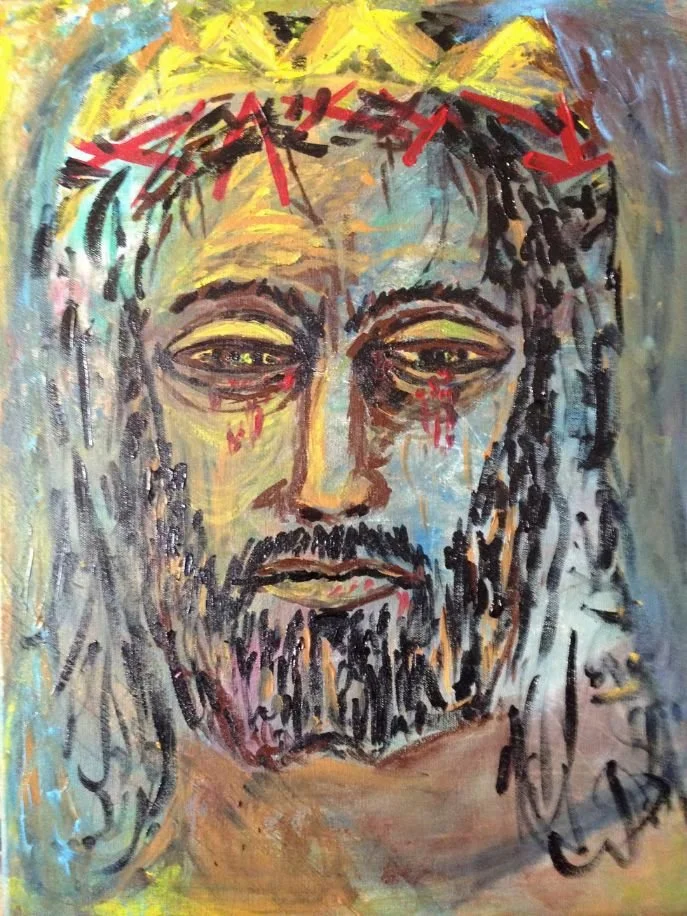
“For I was hungry and you gave me food”
The feast we celebrate today - Christ the King- is just over a hundred years old. It was instituted very aptly in 1925 by Pope Pius in the aftermath of the first world war to counteract rising secularism, atheism and totalitarianism. So it is just as relevant now as then.
And it is the last Sunday of the church year- next week we celebrate Advent Sunday and bring ourselves to prepare for the coming of Christ among us. Just as at the end of December we think of the last year and even make resolutions, perhaps we could think back on the past year of our faith- how it has sustained us, how we have questioned and wondered, how we have all grown together as a community.
The image of Christ as King does not sit easily with me because it can be associated with privilege, control or even coercion. Richard Rohr describes the current nation-state ethos as “I want and I win, therefore I am”. But Jesus doesn’t legitimize human nation-states and their dominating systems of top-down control. By word and deed, Jesus exposes and inverts the whole pyramid.
So perhaps it might be easier to think about Christ and the kingdom he promises. Because Jesus turns traditional worldly views of power upside down - showing that true royal authority is expressed through love, mercy, and service to the vulnerable (the hungry, thirsty, sick, and imprisoned). Christ represents life, life in all its fullness. And that life he wants to share with every single person.
Christ is always biased against those who exploit the weaker and poorer members in their society. Justice is not just based on moral rectitude. It is rather based on equitable sharing and access to the resources necessary for a life of dignity and self-respect.
The gospel today describes 2 types of people who come before God- sheep and goats. And they are very surprised at the criteria Jesus presents for entry into his kingdom.
Speaking first to the sheep, Jesus says:
“Come, you who are blessed by my Father, inherit the kingdom prepared for you, for I was hungry and you gave me food”.
And the sheep are clearly very surprised. This is obviously not what they were expecting to hear. You get the impression that they hardly remember doing these things. And certainly they do not remember ever doing anything of the kind for Jesus. So they reply:
“Lord, when was it that we saw you hungry and gave you food or thirsty and gave you something to drink?
They were probably even more surprised at the answer they got:
“Truly I tell you, just as you did it to one of the least of these brothers and sisters of mine, you did it to me”.
When he turns to the goats, they are condemned not for being morally bad but for not loving those who need care and compassion. And for not recognising Jesus in their brothers and sisters. The picture of the Judgement in the Gospel today is not meant to fill us with fear and trembling. It’s a challenge not about the future, but about today – about how to be more loving and compassionate towards everyone. And this challenge isn’t just our individual journey- it is about our community, about our church.
And contrary to many who feel the church should only concern itself with matters spiritual, the mission of the Church has to be prophetic, to speak the Word of God courageously, honestly and lovingly -and in the midst of everything that happens around us. If it does take sides, it is always with those who have no power or are being exploited.
The Kingdom of God on earth is not dependent on any political orientation, for it is greater and more inclusive than any system. Because Christ stood by the side of each poor person and each sinner, calling them to repentance, life, and the restoration of the dignity bestowed on them by God. The dignity that no one has the right to strip away.
So the mission of the Church is to proclaim the Kingdom of God, a kingdom of justice and peace. Our vocation as a living Church is to bear witness to the goodness of God and the dignity of every human being. As we get older and our faith changes, we can come to understand God as a presence that protects us from nothing but will always sustain us in everything.
The kingdom of God is our hope and our home- and Jesus always proclaimed that the Kingdom of God is among us now – here- in this church. Because it is us- living, caring, trying to live bigger and more generous lives.
A short poem to end with:
‘Today and tomorrow
In time and eternity
Your kingdom come.
In our world, in our streets,
in our homes and communities
Your kingdom come.
In our lives, in our loves
in our hopes and our travelling
Your kingdom come.’
Amen
Ginny Royston
