
The word ‘Jubilee’ will be forever associated in my mind with 1977 and Queen Elizabeth’s Silver Jubilee. In the East Midlands village of my childhood, not especially marked for its deep sense of community, this national event brought us together. All the organisational stops were pulled out with a full day of events and something for everyone - including lots of Babycham if you were old enough (I was 11 and judged to be old enough!).
There have been further Jubilees subsequently, personal, national and global, not least the millennium year; and its proper focus on debt cancellation for the world’s poorest nations, given huge momentum by the Jubilee2000 campaign. Last year, 25 years on, was another Jubilee, although sadly one that only seems to have been marked by the Roman Catholic Church and Pope Francis’ powerful theme calling Catholics to be ‘Pilgrims of Hope’.
‘Jubilee’ has its ancient origins in the Hebrew Scriptures, with every 50 years being a occasion for a more or less entire redistribution of wealth, recognising that all things belong not to us but to God. It was seen as the culmination of seven cycles of sabbath years when land would be left to lie fallow, slaves freed and debts cancelled - in other words, a year of ecological, social and economic renewal.
‘Jubilee’ was adopted by the medieval Catholic Church as a special year called by the church for the faithful to receive blessing and pardon from God - the social and global vision of the Hebrew Scriptures seemingly reduced to matters of largely individual piety. In the modern period, and perhaps especially thanks to the millennium Jubilee2000 campaign, there has been a recovery of a fuller appreciation of the biblical Jubilee: ‘a time to re-establish a proper relationship with God, with one another, and with all of creation.’ (Catholic Bishops of England and Wales)
With all of this in mind I was fascinated to read online that last year was an ‘Ordinary Jubilee’ - meaning one that was celebrated because of the calendar year - and that this year has also been proclaimed as a Jubilee year because we are marking the 800th anniversary of the death of Francis of Assisi. The association of the life of St Francis with the ancient social and ecological themes of Jubilee is powerful and pertinent, even with the rather unusual phenomenon of two Jubilees in a row! But then, the world needs Jubilee; the world needs the broad, rich vision, and practices, of ecological, social, economic, relational and spiritual reconciliation and renewal.
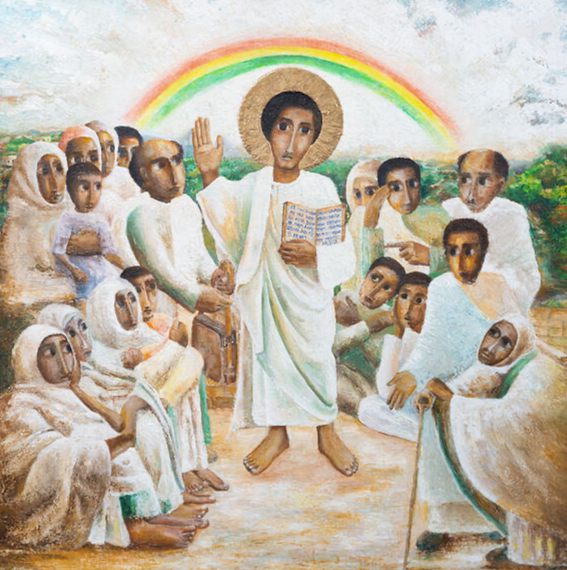
So, Cotham@50: a Jubilee? I hope so, because I hope that the life of our churches will continue to offer and celebrate the kind of fullness of vision at the heart of Jubilee. As we will celebrate on Sunday, with Jesus we are called to be those who announce and live out the ‘year (time) of God’s favour’, the ‘today’ of the fulfilment of a vision for freedom, justice, renewal (Luke 4.18-21).
This is my final contribution to this weekly ‘column’ ahead of my Sabbatical, beginning on Tuesday 6th October. Connected with the ancient patterns of Sabbath years and Jubilee a clergy Sabbatical is offered as a time for some personal and vocational renewal - some ‘fallow’ time and space for ‘re-creation’. I’m looking forward to the gift of this time and space, and will hope to share some of its reflective ‘fruits’ with you when I’m back in December.
With my prayers, that we will all know and share the blessings of God’s Jubilee,
David
